Full Stack Project 28-04-2026
Introducing Planera Budget
Ritik Kumar
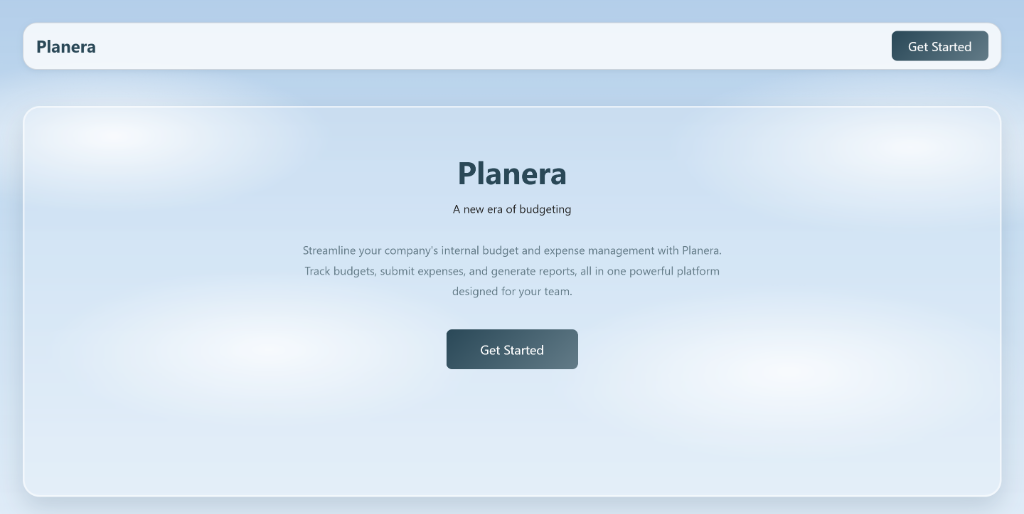
BudgetTrack (Planera Budget) is designed as an internal budget planning and expense management platform for organizations that need strong financial visibility without depending on external accounting or payment systems. The core objective is simple: give employees, managers, and admins a controlled in-app workflow to create budgets, log expenses, review approvals, and generate analytics-backed reports.
The low-level design emphasizes practical enterprise execution. It uses a REST API-based backend architecture, a modern frontend stack (Angular or React), role-based access control, and a relational data model that supports clear auditability. Instead of fragmented sheets and ad-hoc approvals, Planera establishes one structured system for budget operations.
This article presents the product from a technical and product perspective: what makes the project special, core modules, real-world usage, roadmap potential, frequently asked questions, and a final conclusion.
Why Planera Budget Stands Out
Planera stands out because it is intentionally self-contained and internally optimized. Many budget products assume external integrations are mandatory from day one. Planera takes a different route: build a complete internal workflow first, then expand integrations only when necessary. This improves control, simplifies security boundaries, and reduces dependency risk during early and growth stages.
The second differentiator is module-level clarity. User management, budget planning, expense logging and approval, analytics/reporting, and in-app notifications are separate but connected modules. That modularity improves maintainability, helps teams scale features incrementally, and keeps the architecture understandable for both engineering and business stakeholders.
The third advantage is role-driven behavior. Employees focus on expense logging and budget visibility, managers handle allocations and approval flow, and admins govern categories, users, and reports. This role mapping mirrors how organizations actually operate, which makes adoption smoother and governance stronger.
Core Features for Smarter Budgeting
The platform’s documented module design translates into concrete capabilities:
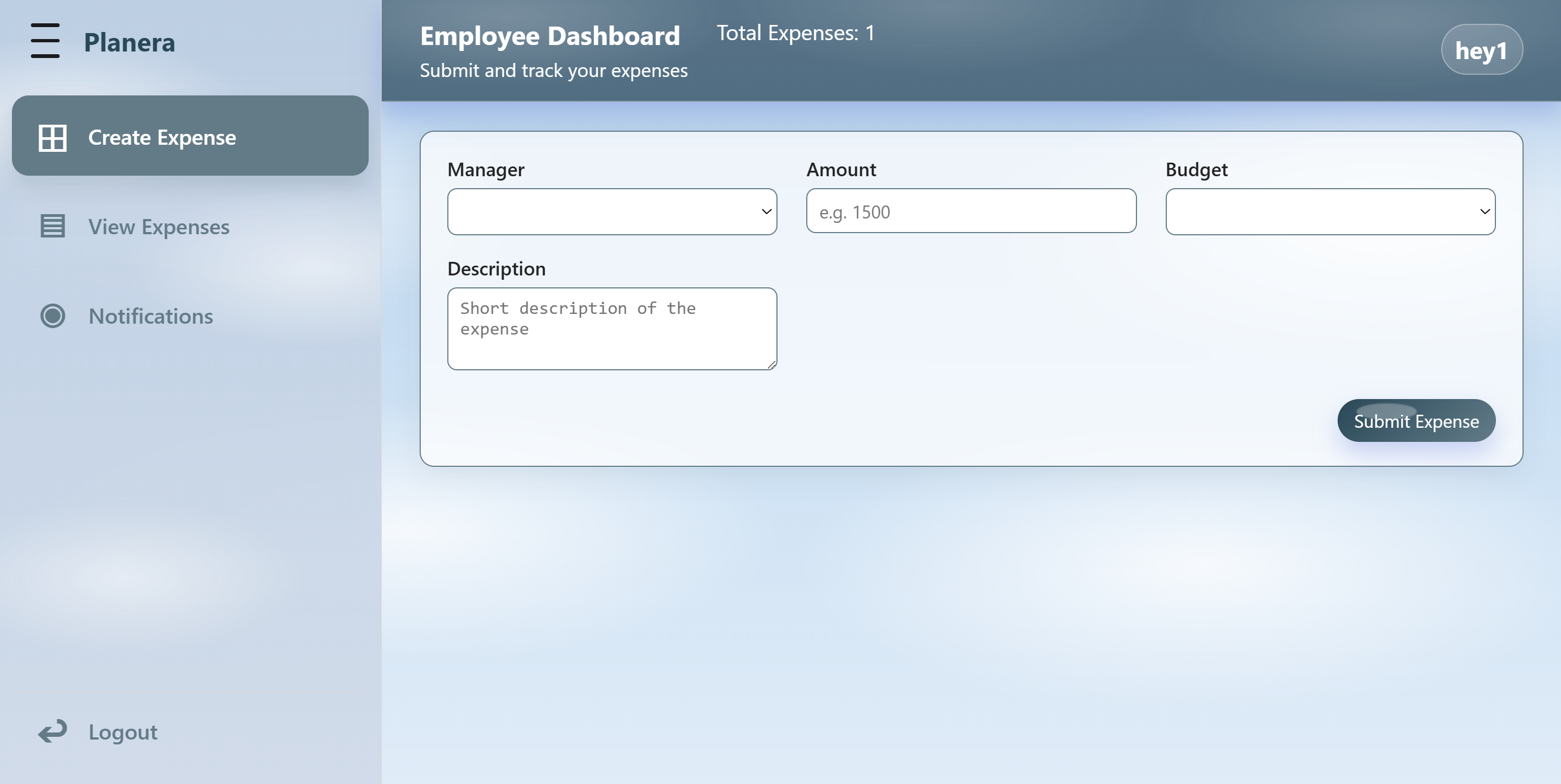
- User Management Module: Supports registration, authentication, profile management, and role-based access for Employee, Manager, and Admin users.
- Budget Planning Module: Enables budget creation by department or project, with allocation limits, date ranges, and status control.
- Expense Logging and Approval Module: Captures expense details, links them to budgets, and routes them through approval or rejection workflows.
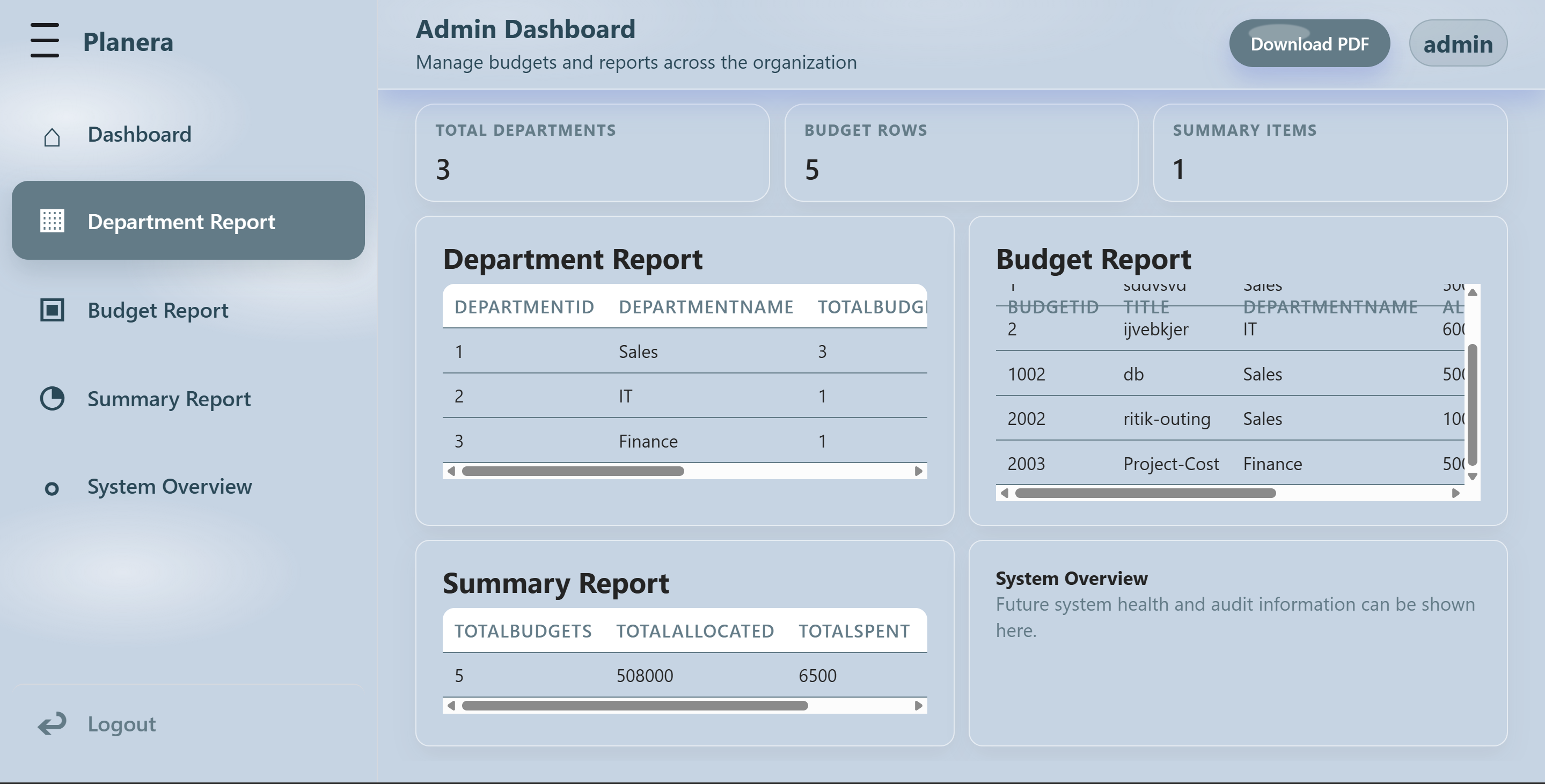
- Financial Analytics and Reporting Module: Tracks utilization trends and report metrics such as total expenses, remaining budget, and approval rate.
- Notifications and In-App Alerts Module: Sends internal alerts for pending approvals and budget-limit thresholds without relying on external email or SMS.
These features are backed by a clean relational schema (`User`, `Budget`, `Expense`, `Report`, `Notification`) and predictable deployment patterns for local and production environments.
Real-World Use Cases
Planera is practical across multiple operating models:
- Internal Department Budgeting: Organizations can allocate and monitor department-level budgets while preserving manager accountability.
- Project-Based Cost Governance: Teams running parallel initiatives can map each expense to a project budget and avoid hidden overruns.
- Approval-Centric Finance Operations: Manager and admin approval pipelines ensure expenses are controlled before settlement cycles.
- Executive Reporting Reviews: Leadership can consume generated utilization and trend reports without waiting for manual data compilation.
- Audit-Ready Internal Controls: Structured status tracking and role-restricted actions improve traceability for governance and compliance workflows.
Because the system is internal-first, teams get operational discipline early, even before introducing third-party accounting dependencies.
Future Uses and Roadmap Potential
Based on the architecture and module boundaries, the roadmap can expand in high-value directions:
- Forecast Intelligence: Add prediction models over expense history to improve budget planning accuracy.
- Scenario-Based Allocation: Simulate conservative and aggressive allocation plans before fiscal approvals.
- Rule Engine Extensions: Introduce policy rules by department, role, or threshold for finer operational governance.
- Advanced Notification Policies: Prioritize alerts by risk severity to improve response quality and approval turnaround.
- Selective Integrations: Add optional connectors to ERP/accounting systems while preserving internal-first control.
With these extensions, Planera can evolve from a budgeting utility into a decision-support platform for financial operations.
Frequently Asked Questions
Q1. Is Planera only for finance teams?
No. It is designed for employees, managers, and admins. Finance governance is supported, but budget operations are shared across teams.
Q2. Can small teams use Planera effectively?
Yes. Small teams benefit from the modular workflow because they get control without heavyweight process overhead.
Q3. Does Planera replace accounting software?
Not by default. Planera is focused on internal planning, approvals, tracking, and analytics. It can complement external accounting platforms later.
Q4. How does Planera improve decision-making?
By consolidating budget, expense, approval, and reporting data into one system, it removes guesswork and improves decision speed.
Q5. Is it useful for project-based businesses?
Absolutely. Its budget-to-expense linking and role-based approvals make it effective for project, department, and hybrid operating models.
Final Thoughts
Planera Budget is a strong example of an internal-first financial operations platform built with practical architecture and clear module boundaries. By combining user management, budget planning, expense approval, analytics, and in-app alerts, it creates a complete operational loop rather than isolated features.
For teams moving beyond spreadsheet-driven budgeting, this design offers immediate gains in control, traceability, and execution speed. With future enhancements such as forecasting, scenario modeling, and selective integrations, Planera is well-positioned to become a long-term strategic layer for budget governance and organizational planning.